
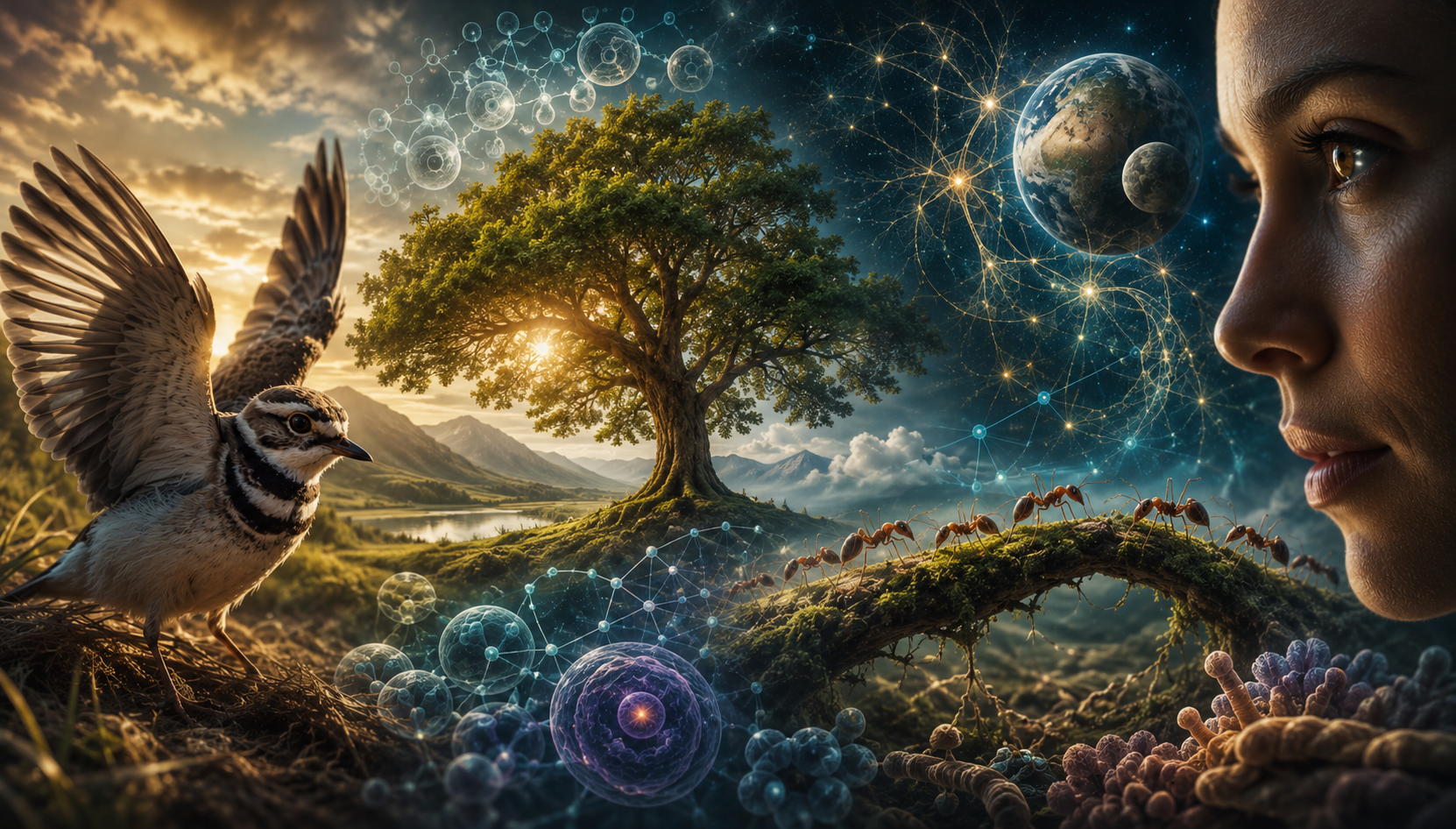

Is purpose returning to science?
This article explores the renewed scientific interest in purpose, agency, and goal-directedness in living systems through the work of philosopher of biology Alan Love. Once regarded with suspicion because of its association with teleology, the language of purpose is returning to serious biological inquiry. From animal behavior and cellular agency to collective organisms and artificial intelligence, Love asks whether concepts such as agency, directionality, and function capture genuine features of life that cannot simply be explained away. His approach opens a broader question: have some fundamental questions been prematurely excluded by our scientific assumptions? The Ātma Paradigm shares this openness, extending it to consciousness and exploring what becomes possible when consciousness is considered not merely a product of physical processes, but a distinct and irreducible category of reality.
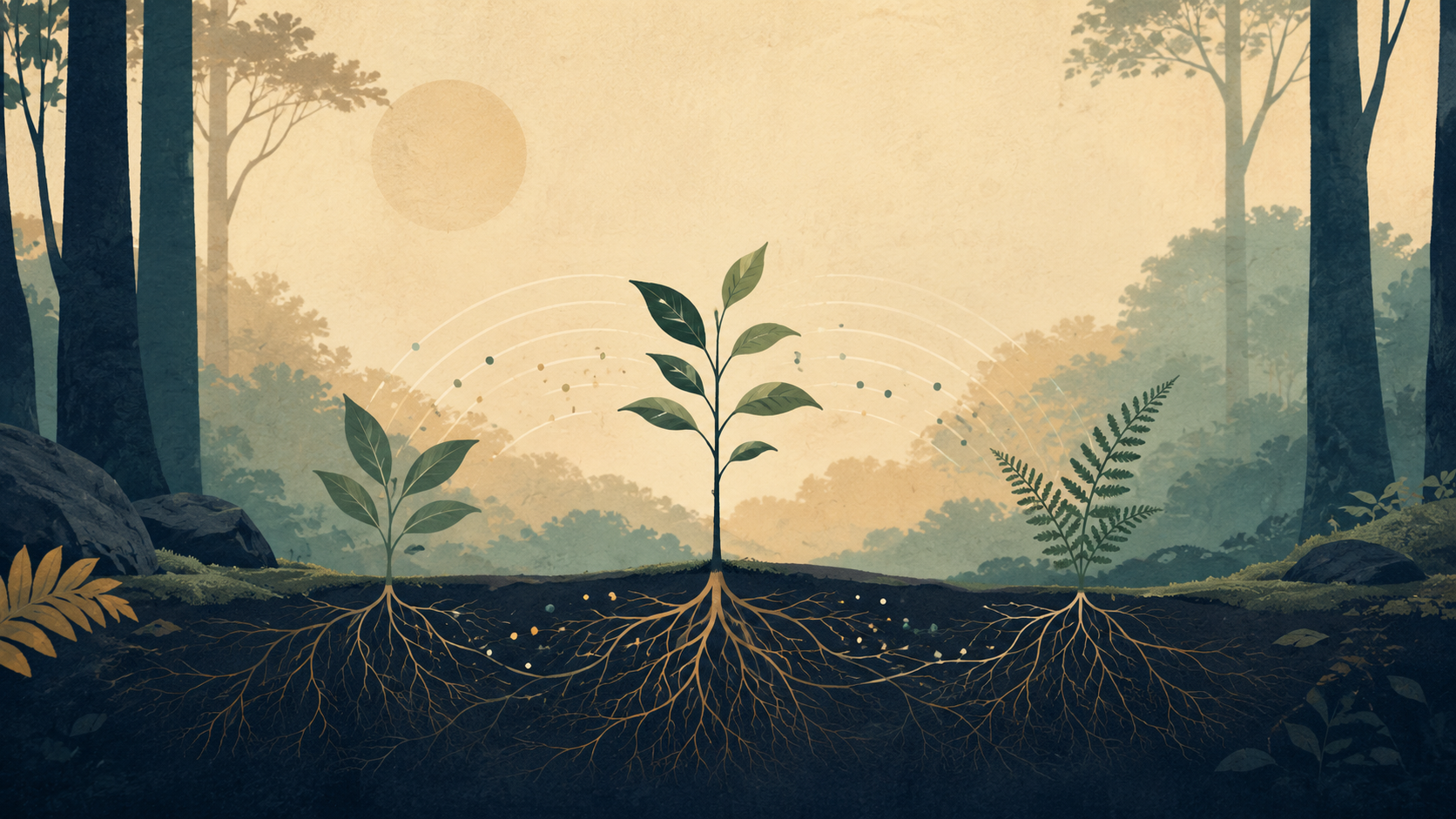

Silently Conscious: Evidence for Plant Consciousness
Can plants perceive, learn, remember, and even communicate? Emerging research reveals surprisingly sophisticated behaviors in plants—from acoustic and chemical signaling to spatial awareness, learning, memory, and complex internal communication networks. These findings challenge traditional assumptions that consciousness requires a brain or nervous system and raise a provocative question: could plants possess a radically different form of conscious experience?

The QT45 Ribozyme: Why Molecular Replication is Not Life
The discovery of the QT45 ribozyme challenges our understanding of life’s origins, suggesting that the barrier for self-replicating molecules is lower than thought. This minimalist ribozyme raises critical questions about the distinction between chemical replication and the agency inherent in biological life. As we explore RNA behavior and the conditions necessary for life, we face a paradox: our growing knowledge makes the requirements for life more complex. Discover the implications of this research and its limitations in understanding life’s essence.
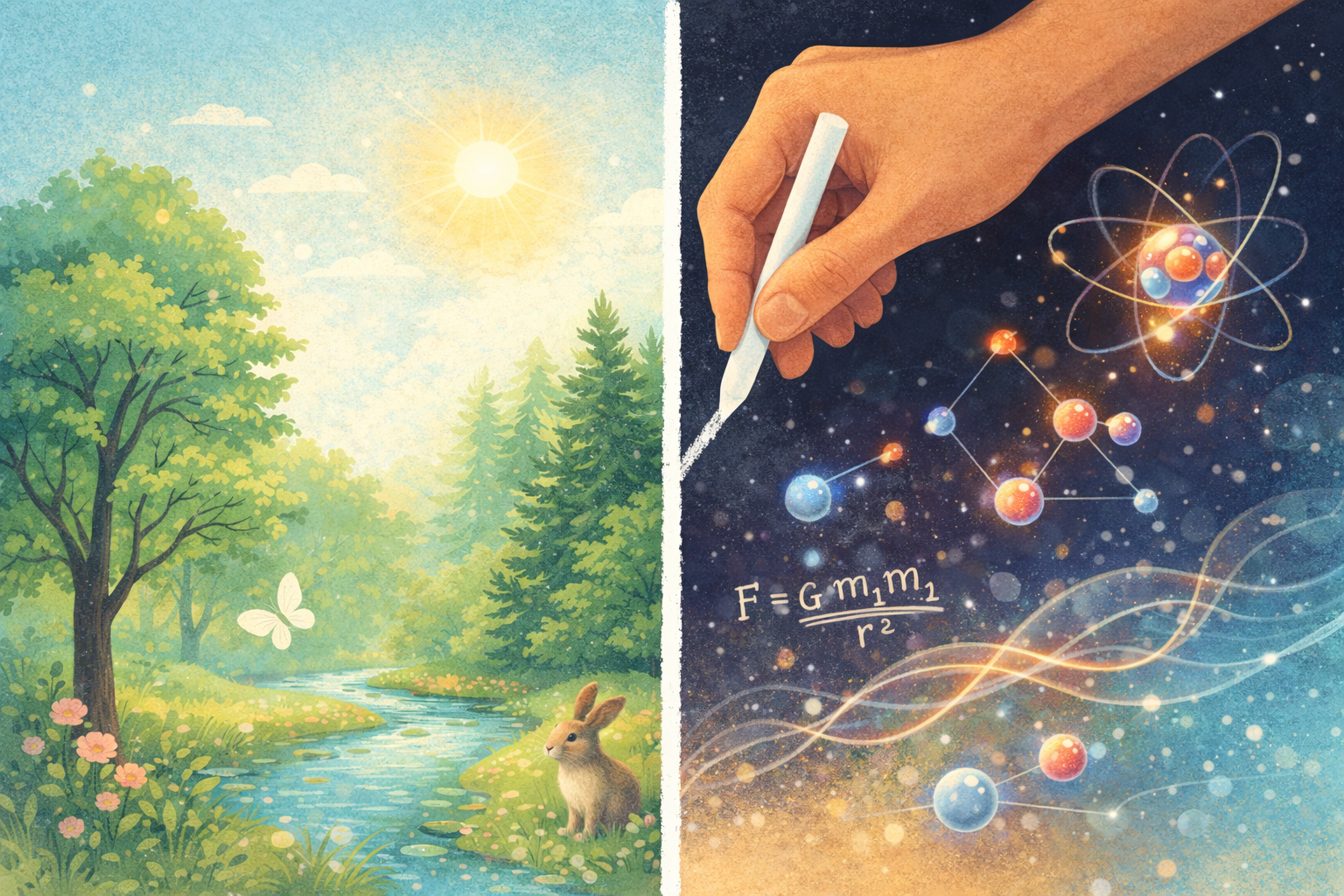

When Physics Encounters Life
When Physics Encounters Life discusses a shift in science, as Adam Frank argues that traditional physics struggles to explain the complexities of living systems. He posits that life is more than just particles; it is a dynamic process that challenges reductionist views. Concepts like self-organization and information use emphasize the unique agency of living beings. The Ātma Paradigm suggests that consciousness is fundamental to reality. This article encourages readers to rethink the relationship between physics, life, and consciousness, offering a deeper understanding of existence beyond conventional science.
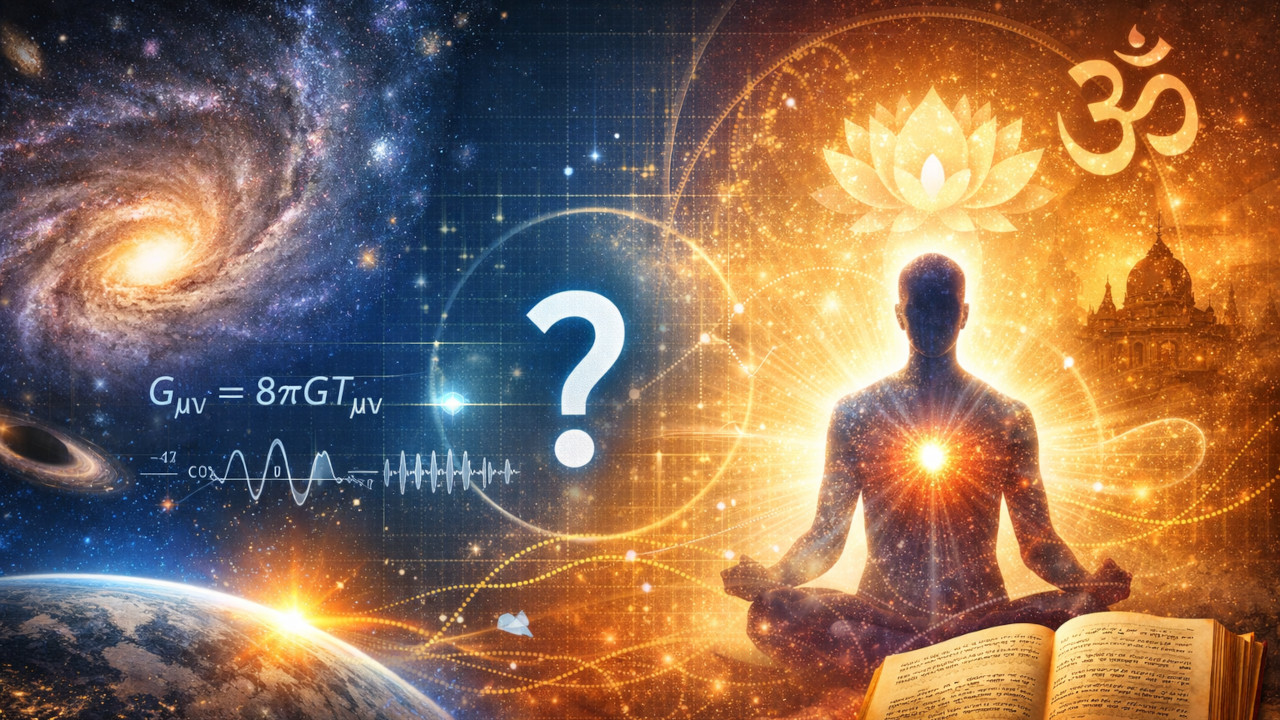
What science can and cannot explain
Science powerfully describes how the universe behaves, but it remains silent on deeper questions of meaning, consciousness, and purpose. Drawing on examples from cosmology and quantum mechanics, this article explores the limits of scientific explanation and the role of the observer in knowledge itself. Through the lens of the Ātma Paradigm and Bhāgavata philosophy, it argues that consciousness is not a byproduct of matter, but the foundation that makes reality and understanding possible.

Does the Universe Need an Observer?
How can a universe exist without any observer within it? A new paradox in modern physics suggests that a fully observer-free cosmos may collapse into a single informational state, and that complexity returns only when reality is described from a standpoint inside it, echoing the Vedic triad of knower, known, and knowing.