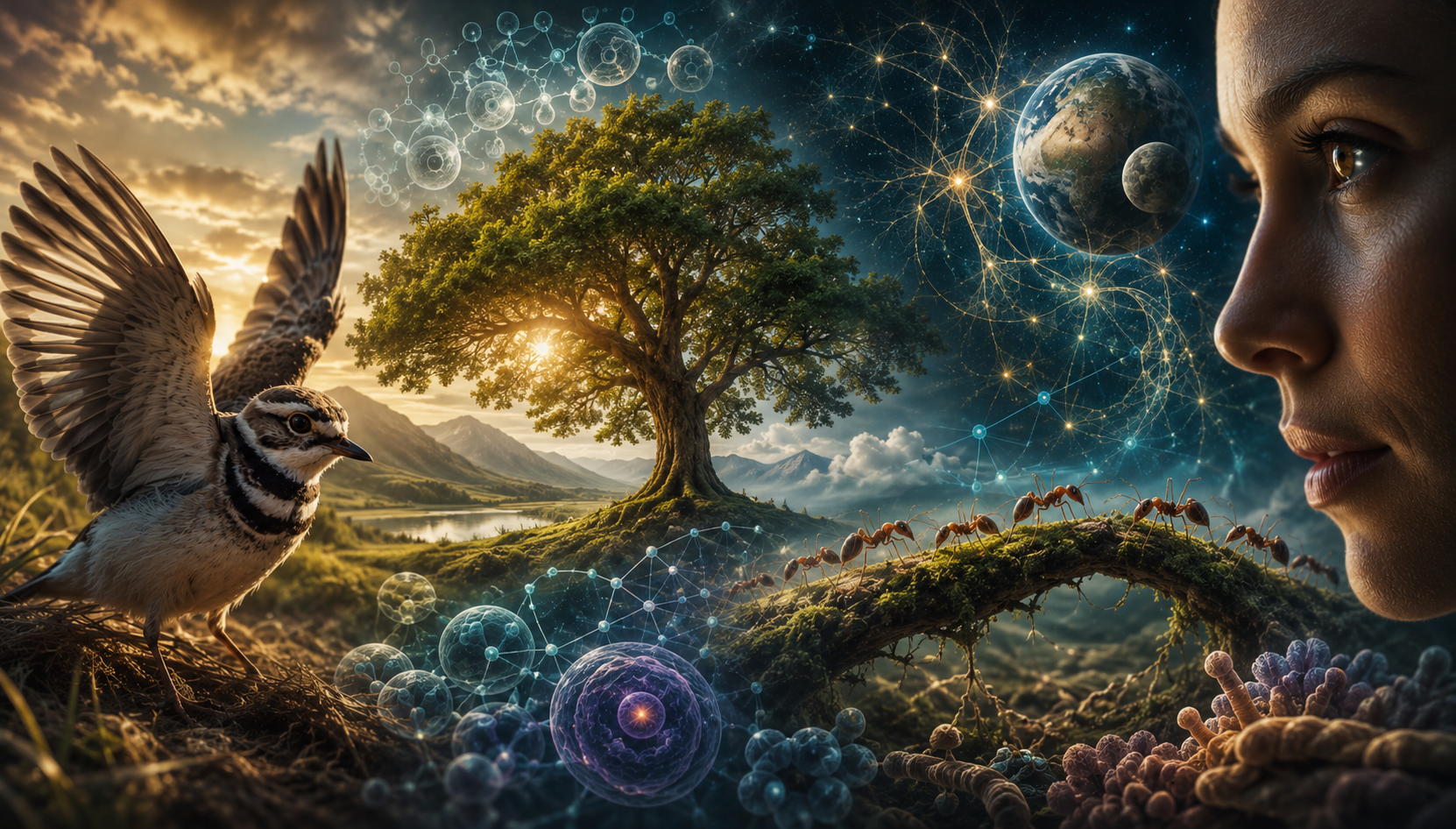
For much of modern science, asking whether living things have a purpose has been treated with suspicion. Biology could investigate mechanisms, adaptations and evolutionary history, but purpose seemed to belong somewhere else: to philosophy, theology or perhaps simply to the way human beings talk about the world. But is that distinction really so clear?
In a recent interview for The Well (click here for the full video), philosopher of biology Alan Love argues that the question of purpose deserves to be reopened. Not by abandoning scientific rigor, and not by simply returning to older ideas of design, but by asking whether concepts such as agency, goal-directedness, function and directionality describe genuine features of living systems that science has not yet fully understood.
It is a surprisingly far-reaching proposal. And perhaps the most interesting thing about Love’s argument is that he does not claim to already have the answer. Instead, he suggests that science may have prematurely restricted the kinds of questions it allows itself to ask.
Who is Alan Love?
Alan Love is a Distinguished McKnight University Professor of Philosophy and Winton Chair in the Liberal Arts at the University of Minnesota, where he also directs the Minnesota Center for Philosophy of Science. His research lies at the intersection of philosophy and biology, particularly evolutionary developmental biology, scientific explanation, reductionism and interdisciplinary research.
He has also been at the center of an ambitious attempt to bring the scientific study of purpose back into serious academic discussion. Love was the principal investigator of Agency, Directionality, and Function: Foundations for a Science of Purpose, a three-year interdisciplinary project supported by a $14.56 million grant from the John Templeton Foundation. The project brought together philosophers, theoreticians and experimental scientists to investigate whether apparently purposive characteristics of living systems can be defined precisely enough to generate models, measurements and experimental tests.
That work is now continuing on a broader scale. In 2026, Love became the leader of the new Consortium for Advancing a Science of Purpose, a five-year initiative devoted to agency, cognition, development, function and goal-directedness in living systems. The interview therefore represents much more than one philosopher speculating about an ancient question. It provides a window into an active interdisciplinary research program.
Why did science become uncomfortable with purpose?
The difficulty begins with a familiar word: teleology. From the Greek telos, meaning goal or end, teleology concerns explanations in terms of purposes or goals. In ordinary language, such explanations seem almost unavoidable. We say that eyes are for seeing, teeth are for chewing, wings are for flying. Living organisms appear filled with structures and behaviors that accomplish particular ends. Historically, however, this language became problematic.
As mechanistic science and evolutionary biology developed, scientists became increasingly cautious about expressions that seemed to imply that biological structures had been intentionally designed for particular purposes. Consequently, especially during the twentieth century, teleological language was often avoided or reinterpreted.
Avoiding teleological language, however, does not make the phenomenon disappear. Living systems still seem to exhibit functions, goals and directionality. Love’s proposal is that, rather than explaining these features away, we should ask what they actually are, and whether they can be investigated scientifically.
A bird that pretends to be injured
Consider one of Love’s examples. Some ground-nesting birds perform what is known as a broken-wing display. When a predator approaches their nest, the adult bird moves away while behaving as though one of its wings were injured. The predator follows what appears to be easy prey and is consequently drawn away from the eggs or chicks. Once sufficiently far from the nest, the bird flies away.
What exactly are we observing? We can certainly investigate the mechanisms involved: sensory signals, neural processes, muscular movements, evolutionary history. But another description seems equally difficult to avoid: the bird is doing something in order to achieve an outcome. The behavior is successful if the predator is diverted from the nest.
This leads to two different questions.
What is this behavior for?
And, more fundamentally: “What kind of system is capable of behaving in this way at all?”
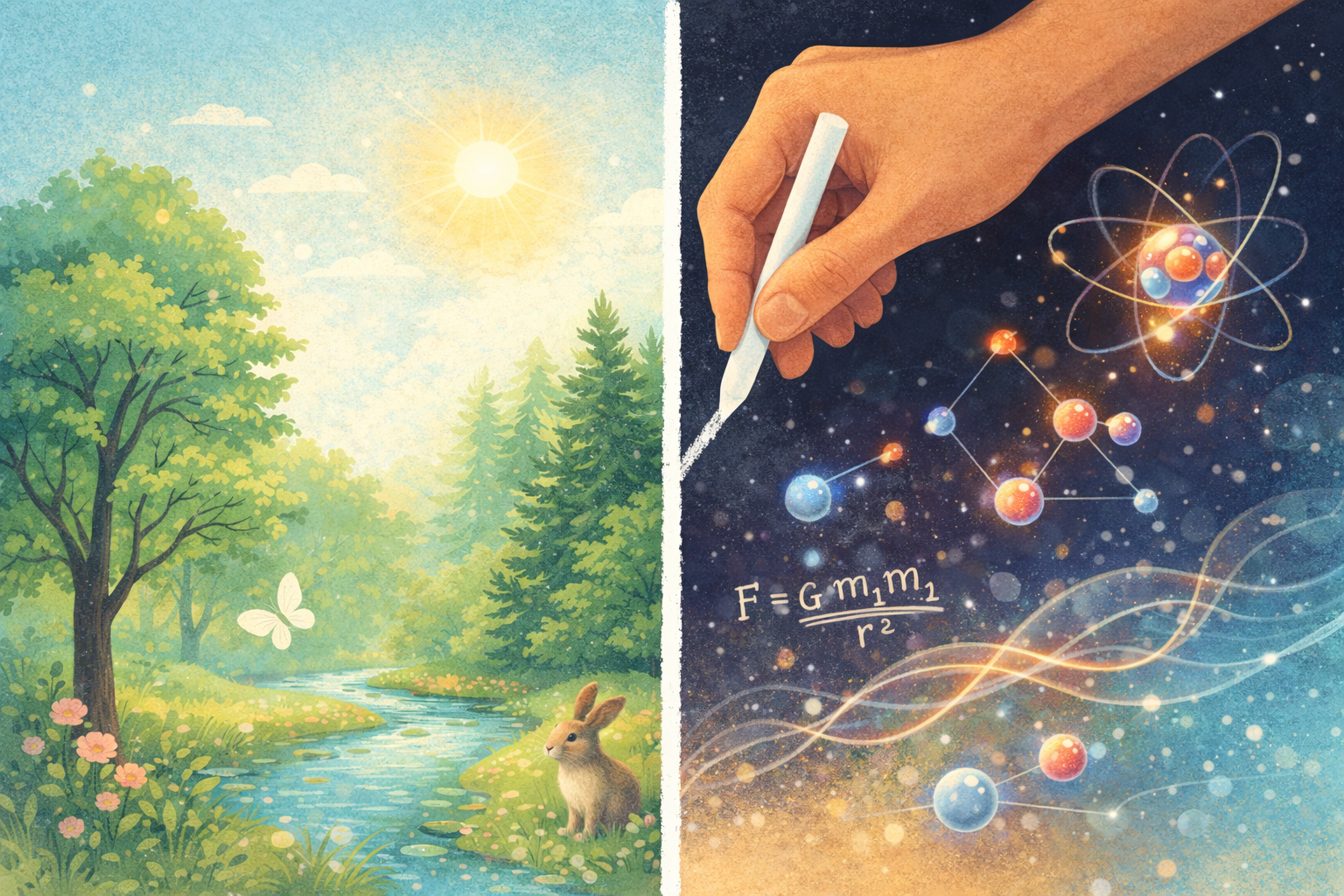
That second question takes us remarkably close to another unresolved problem: “what distinguishes a living system from a merely physical process?” A stone rolling downhill has a direction. A squirrel gathering food also has a direction. But do these two forms of directionality really belong to the same category?
Agency without a mind?
Love identifies three interconnected concepts: agency, directionality and function. Agency concerns the capacity of organisms to maintain themselves and to select among possible behaviors in pursuit of goals. Directionality concerns the distinctive tendency of living systems toward certain outcomes. Function concerns what biological structures or behaviors accomplish within an organism.
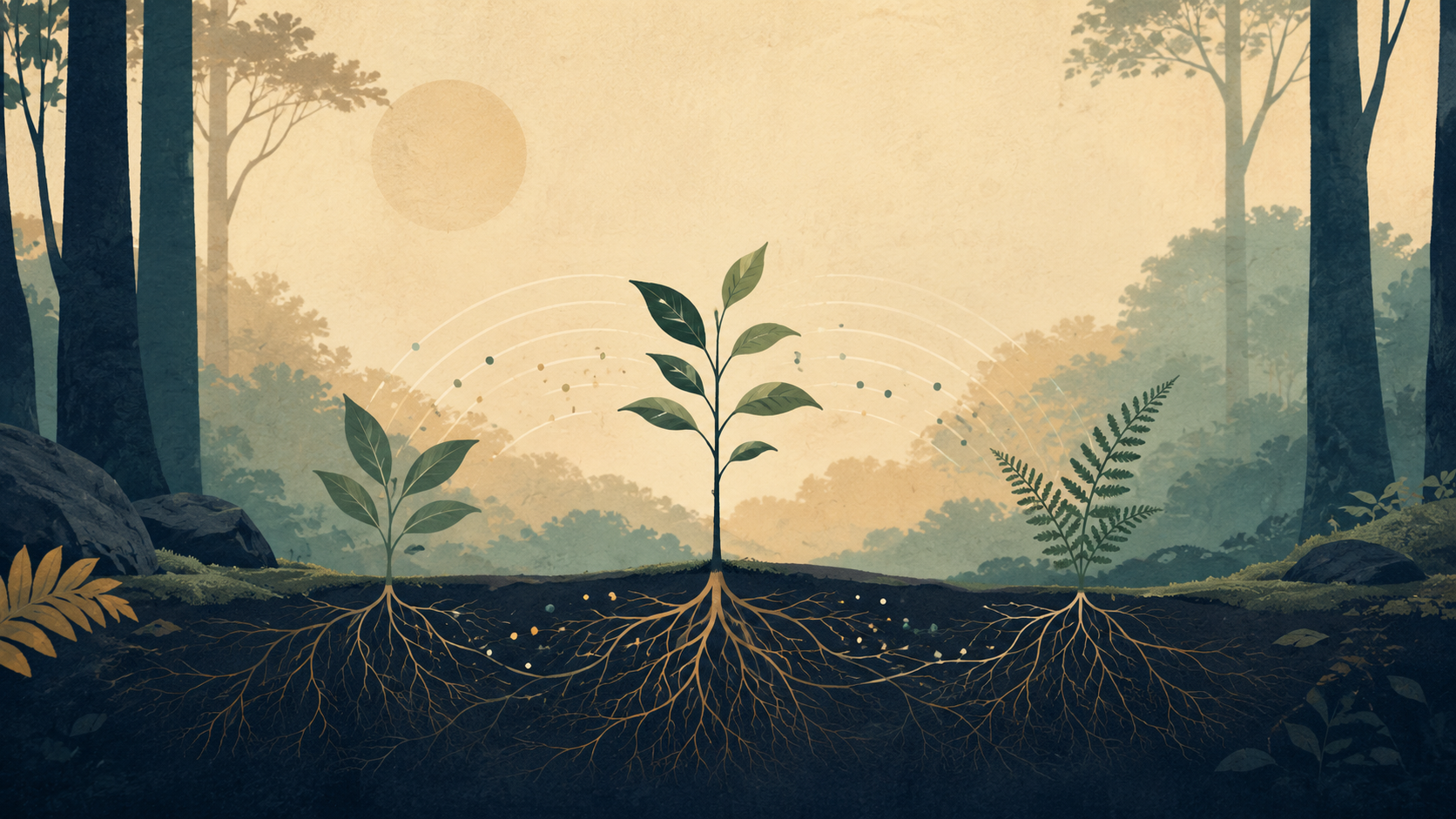
These concepts become particularly interesting when we move below the level of animals with brains. Cells, for example, regulate their internal conditions, respond to environmental changes, cooperate, compete and alter their behavior according to circumstances. Should these processes be described merely as complicated chains of molecular reactions? Or is some concept of agency scientifically useful even at the cellular level?
Love illustrates the problem with cancer. A cancer cell can be understood as a cell whose behavior is no longer subordinated to the organization of the organism. In Love’s striking formulation, it has in some sense “gone rogue.” Its own proliferation has become primary rather than the requirements of the multicellular organism of which it is part.
Of course, describing cancer in terms of agency does not replace genetics, molecular biology or cellular mechanisms. Love’s point is different: perhaps these levels of explanation are complementary rather than mutually exclusive. And if that is true, then biology may need a richer conceptual vocabulary than mechanism alone.
Where does agency begin?
The problem becomes even more intriguing when organisms cooperate. Ants can collectively form bridges with their own bodies. Termites construct enormous structures that outlive any individual termite. Wolf packs coordinate their behavior while hunting.
Where, exactly, is the goal in such systems?
Does it belong to each individual?
To the group?
Can a system behave as though directed toward an outcome even when no individual possesses a representation of the final goal?
Love regards this problem of collective agency as one of the genuinely difficult questions confronting biology.
Artificial intelligence makes the question even harder. We routinely call AI systems “agents.” They solve problems, pursue specified goals and choose between possible actions. But are they agents in the same sense that living organisms are?
Love thinks the comparison between biology and AI could become scientifically productive. Biological systems might reveal principles of organization useful for understanding artificial agents, while artificial systems allow researchers to manipulate forms of goal-directed behavior in ways that would be impossible with living organisms.
At the same time, he offers an important warning. Humans are remarkably prone to anthropomorphism. We may attribute thought, feeling or intention to an AI system simply because its behavior resembles our own. But observable behavior alone may not justify those conclusions. The same caution applies in biology. Calling something an “agent” is not yet an explanation. It is the beginning of an investigation.
A science built around open questions
There is another aspect of Love’s interview that deserves attention. He argues that many of today’s scientific disciplines have become intellectually isolated from one another. Biology itself, however, refuses to respect these boundaries: understanding an organism may simultaneously require physics, chemistry, developmental biology, evolutionary theory, information theory and other fields.
Questions about purpose may require an even broader conversation involving biology, philosophy, cognitive science, artificial intelligence and perhaps other disciplines. This interdisciplinary ambition also explains the context in which the interview appeared.
The Well is a platform created by the John Templeton Foundation in partnership with Big Think, explicitly devoted to large questions at the intersection of science, philosophy and the humanities. The John Templeton Foundation has also made the scientific investigation of purpose a substantial research priority, allocating major funding to questions concerning agency, directionality and goal-directed phenomena in nature.
Love’s work belongs directly within this emerging conversation. And perhaps its most valuable contribution is not an answer, but the freedom to ask some of the most fundamental questions again—openly, seriously, and without feeling that they somehow fall outside the boundaries of legitimate scientific inquiry.
- Is purpose real, or simply a way of describing what living systems do?
- What makes a system capable of goal-directed behavior in the first place?
- What does it mean for a living organism to be an agent?
- How can individual organisms act together toward a goal that no single individual necessarily represents?
- Are AI agents really comparable to biological agents—and on what basis can we decide?
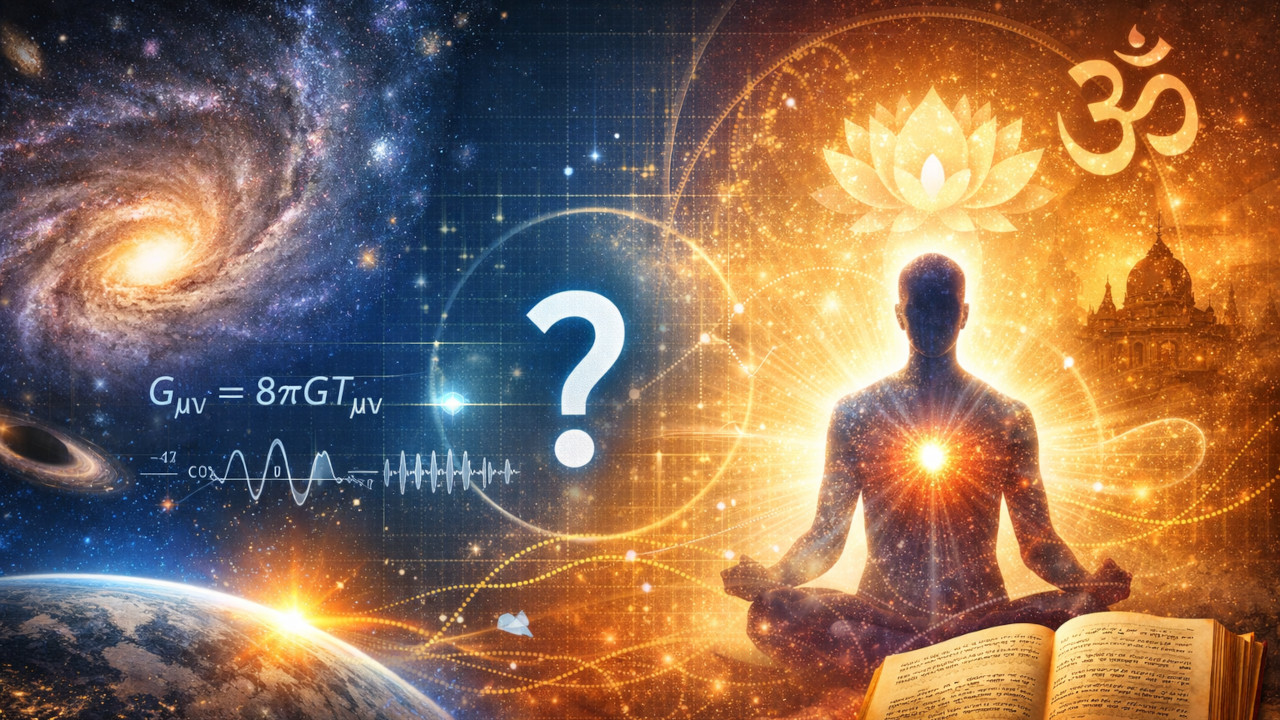
These are precisely the kinds of questions from which the Ātma Paradigm begins. It shares Love’s willingness to reconsider assumptions that may have prematurely limited our investigation of living systems, but takes the inquiry in a further direction. Rather than beginning from physicalism, the assumption that physical reality is fundamental and that life, agency and consciousness must ultimately be explained in physical terms, the Ātma Paradigm explores a different metaphysical starting point. It considers consciousness as a distinct and irreducible category of reality, and asks what our understanding of life, agency and the universe might look like if we build from that premise.
This is not presented as a conclusion already established, but as a hypothesis worth exploring: what changes if, instead of trying to explain consciousness away, we begin by taking its existence seriously?